
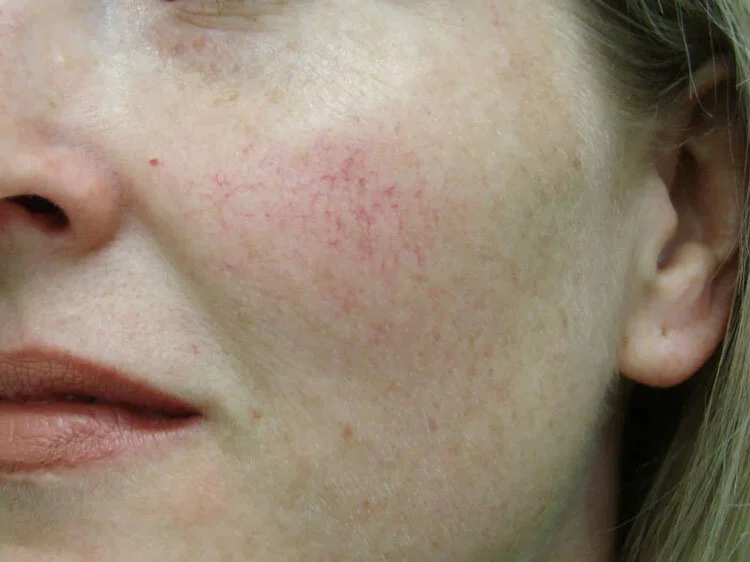
If you've noticed tiny red lines around your nose, cheeks, or chin that never seem to disappear, you're probably dealing with broken capillaries. They're one of the most common skin concerns I see in the treatment room, especially as we age.
The good news is they are harmless.
The bad news is that once a capillary has permanently stretched or become damaged, no skincare product can make it disappear.
Let's talk about what causes broken capillaries, what treatments actually work, and how to help prevent new ones from forming.
What Are Broken Capillaries?
Broken capillaries, sometimes called spider veins or facial telangiectasia, are tiny blood vessels that become enlarged and visible just beneath the surface of the skin.
They often appear as fine red, pink, or purple lines and are most commonly found around the:
Nose
Cheeks
Chin
People with fair or thin skin tend to notice them more, but they can occur in any skin type.
What Causes Broken Capillaries?
Several factors contribute to broken capillaries, including:
Years of sun exposure
Natural aging
Fair or delicate skin
Genetics
Rosacea
Frequent exposure to extreme heat or cold
Repeated facial flushing
Excessive alcohol consumption
Smoking
Long term use of topical steroids
While aging plays a role, chronic sun damage remains one of the biggest contributors.
Can Skincare Products Get Rid of Broken Capillaries?
Unfortunately, no.
Many creams and serums claim to eliminate broken capillaries, but there is currently no scientific evidence that topical skincare can remove a damaged blood vessel once it has formed.
Certain ingredients can help calm redness and support the skin barrier, making the skin appear less irritated, but they cannot erase visible capillaries.
What Is the Best Treatment for Broken Capillaries?
Laser treatment is considered the gold standard for permanently reducing visible facial capillaries.
Vascular lasers target the blood inside the damaged vessel. The vessel is absorbed by the body over time while leaving the surrounding skin largely unaffected.
Depending on the number and size of the vessels, multiple treatments may be recommended. Some people experience mild redness or temporary bruising afterward, so it's worth planning around important events.
If you're considering laser treatment, schedule a consultation with a board certified dermatologist or qualified medical provider to determine which laser is best for your skin type.
Can You Prevent Broken Capillaries?
While you can't prevent every broken capillary, you can significantly reduce your risk by protecting your skin every day.
Here are the habits I recommend to my clients:
Wear a broad spectrum mineral sunscreen every day, even when it's cloudy.
Avoid prolonged sun exposure whenever possible.
Protect your face from extreme heat and cold.
Treat rosacea early if you have persistent facial redness.
Limit excessive alcohol consumption if facial flushing is a frequent issue.
Avoid aggressive scrubbing or harsh skincare that repeatedly irritates the skin.
Consistent sun protection remains the single most effective way to help prevent new broken capillaries from developing.
Frequently Asked Questions
Can broken capillaries heal on their own?
Most permanent broken capillaries do not disappear without laser treatment. Temporary redness from irritation may improve, but enlarged blood vessels typically remain visible.
Does retinol remove broken capillaries?
No. Retinol offers many anti aging benefits and helps improve skin texture, but it does not remove broken blood vessels.
Are broken capillaries a sign of aging?
They can be. Aging naturally thins the skin and weakens blood vessel walls, making capillaries more noticeable over time.
Are broken capillaries dangerous?
No. They are usually a cosmetic concern rather than a medical problem. However, if you notice sudden widespread changes or other unusual symptoms, it's a good idea to consult your healthcare provider.
Final Thoughts
Broken capillaries can be frustrating, but understanding what actually works can save you time and money. While creams cannot erase damaged blood vessels, protecting your skin from the sun and seeking laser treatment when appropriate can make a significant difference.
If you're looking to improve your overall skin health, reduce inflammation, or build a personalized skincare routine, we'd love to help. At DERMASPACE in downtown Seattle, every facial is customized to your skin's unique needs and long term goals.